
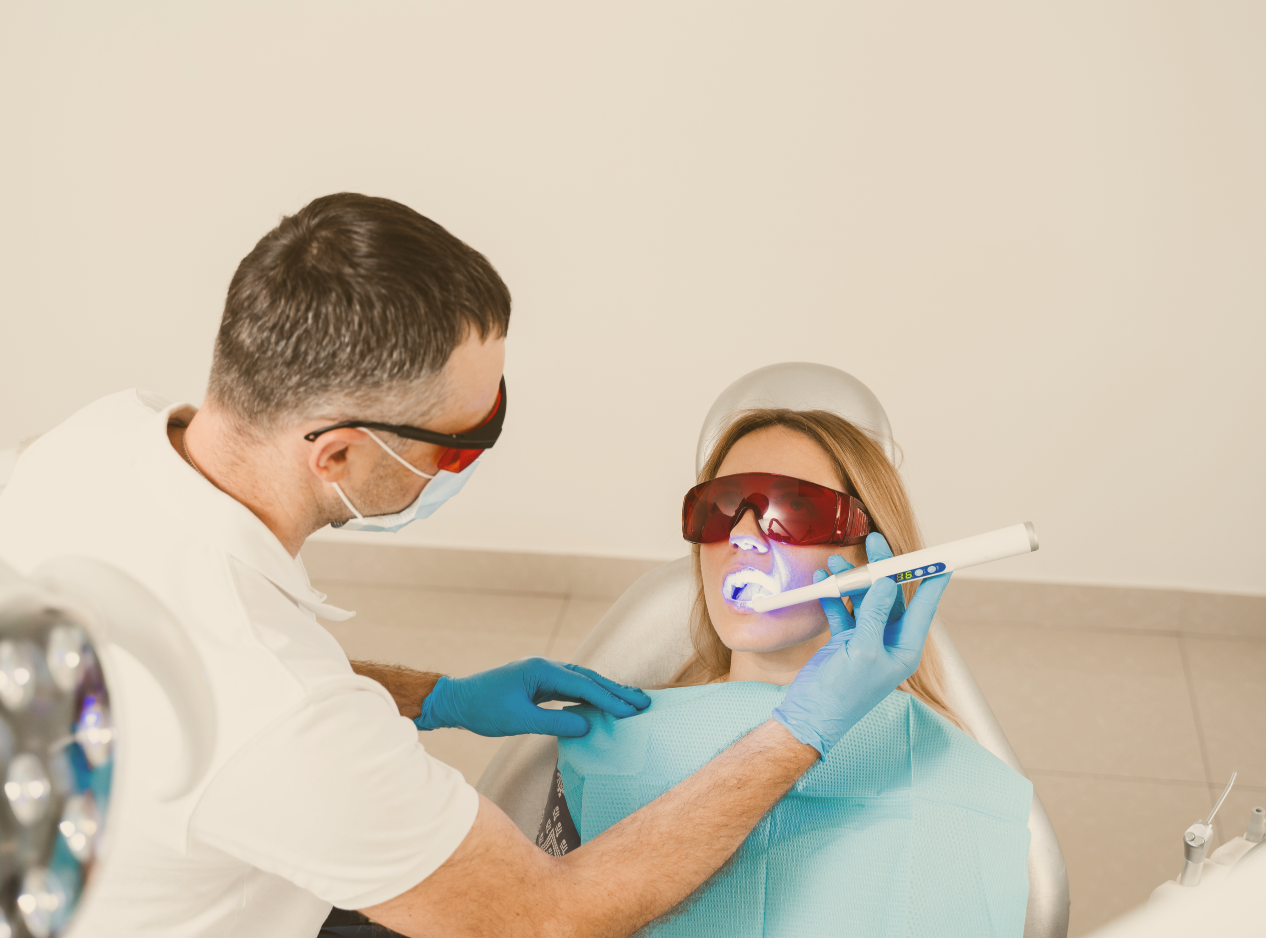
Laser dentistry can treat or reshape gum tissue by using a focused beam of light to cut or vaporize a thin layer of soft tissue, and some lasers also seal small blood vessels. It is used for procedures such as gum contouring and frenectomy.
Gum procedures usually involve only a small amount of tissue, so precision matters more than speed. A soft tissue laser suits some gum concerns, and not others, and the plan depends on the tissue involved and the reason for treatment.
How a Soft Tissue Laser Works on Gum Tissue
A dental laser delivers a focused beam of light energy that removes soft tissue in very thin layers. Cutting and removing soft tissue is the most firmly supported use of dental lasers, and some types also control bleeding while they cut.
Different laser types behave differently. A diode laser affects only a few cell layers, which suits fine gum work. Other lasers can also work on tooth structure, so the type is matched to the procedure.
Which Gum Procedures Can Use a Laser
Soft tissue lasers are used for several well-defined gum procedures, each with a different purpose. Some are cosmetic, others are functional, and some prepare a tooth for restorative work.
- A gingivectomy removes excess gum tissue that covers part of a tooth or forms deep gum pockets.
- A gingivoplasty reshapes the gumline so the edges look more even around the teeth.
- Crown lengthening exposes more of the tooth when a crown or filling needs a firmer hold.
- A frenectomy releases a tight band of tissue that restricts movement of the lip or tongue.
How Gum Reshaping Changes a Smile
Gums that sit unevenly, or that cover a large part of the front teeth, can make teeth look short or uneven. Reshaping the gumline removes small amounts of tissue so the edges frame the teeth more evenly. A consultation confirms how much change is realistic.
Laser reshaping allows fine adjustments, which helps when only a millimetre or two of change is needed. A gummy smile that comes from the bone or the upper lip may call for a different approach, and the dentist explains which one fits.
How a Laser Gum Visit Unfolds
Laser gum procedures are usually short visits, and the plan is explained beforehand so there are no surprises. The reason for treatment and the result being aimed for are discussed first, along with any questions about comfort.
The gum area is numbed as needed, the laser reshapes or releases the tissue, and aftercare instructions cover eating and cleaning. A short review confirms that the tissue is settling as expected.
Laser Dentistry at Eagle Point Dental
At Eagle Point Dental in Nanaimo, BC, we use the Waterlase iPlus laser, which works on both hard and soft tissue, for treatments such as cavity preparation and uncovering dental implants. Our services also include same-day crowns, dental implants, and sedation dentistry.
Patients who wonder whether a laser suits a gum concern can raise it during an appointment, and our team will explain whether it fits that situation and which other gum care options apply. Questions about healing, eating, and daily cleaning afterwards are welcome as well.
Gum Care in Nanaimo, BC
A laser is one of several tools for reshaping or releasing gum tissue, and the right choice depends on the goal. Eagle Point Dental welcomes questions about gum concerns from patients in Nanaimo, North Nanaimo, and Dover.
Frequently Asked Questions
What is the difference between a soft tissue laser and a hard tissue laser?
A soft tissue laser works on gums and other soft tissue only, while a hard tissue laser can also work on tooth structure. Some systems handle both, and the choice depends on the procedure being planned.
Does laser gum treatment need numbing?
The need for numbing depends on the procedure and the tissue involved. Small soft tissue procedures may need only a topical gel, while larger ones use a local anaesthetic, and the dentist explains the approach beforehand.
Is laser gum reshaping permanent?
Reshaped gum tissue generally stays in its new position, although later gum disease or recession can change the gumline again. Daily cleaning and regular checkups help the results stay stable over the long term.
How long does a laser gum procedure take?
Duration depends on how much tissue is involved. A single small area can be a short visit, while several areas or combined treatment take longer, and the dentist can give a realistic estimate beforehand.
Can a laser help with bleeding or inflamed gums?
Bleeding gums usually trace back to plaque and inflammation, so cleaning and daily home care come first. A laser may be considered afterwards for specific tissue changes, and the dentist decides when that applies.
